
Program Only
12 months of self-guided digital lessons, audio, visualisations and guides. Includes Ask Chuck, 24/7 AI recovery support; no human support.
OCD is not a quirky personality trait — it is a debilitating anxiety disorder. When you address the fear sensitisation at its root, the obsessions and compulsions lose their power and fade.
650,000+
people recovered worldwide
60-day money-back guarantee · Instant access

Recovery from Obsessive-Compulsive Disorder is possible — and thousands of people have already done it.
You might be reading this because…
There's something you can't not check. Or a thought that keeps coming back — intrusive, unwanted, completely at odds with who you are — that you can't dismiss no matter how hard you try. You've developed ways of managing it. A ritual, a routine, a sequence that has to happen before you feel okay. It takes longer than it used to. Sometimes much longer. You know, on some level, it doesn't make sense. But the alternative — not doing it — feels unbearable. And behind it all is the exhaustion of keeping this private. The shame of it. The fear that if anyone knew the actual content of your thoughts, they'd be horrified. They wouldn't. You're not horrifying. You have OCD.
The intrusive thoughts
They arrive without warning — violent, disturbing, or deeply shameful. They feel nothing like you. That gap between the thought and who you actually are is exactly what makes OCD so distressing — and exactly what makes it OCD rather than anything else.
The rumination
You try to think your way out. You analyse the thought, examine it from every angle, look for proof that you're safe. But every round of analysis feeds the cycle — reassurance works for minutes, then the doubt returns, louder.
The compulsive rituals
Checking, counting, arranging, repeating — or purely mental versions of the same. The ritual brings temporary relief. Then the anxiety rebuilds, and the bar for 'enough' keeps rising. This is the loop OCD lives in.
If any of that resonates — you're in exactly the right place.
A personal message from Charles Linden
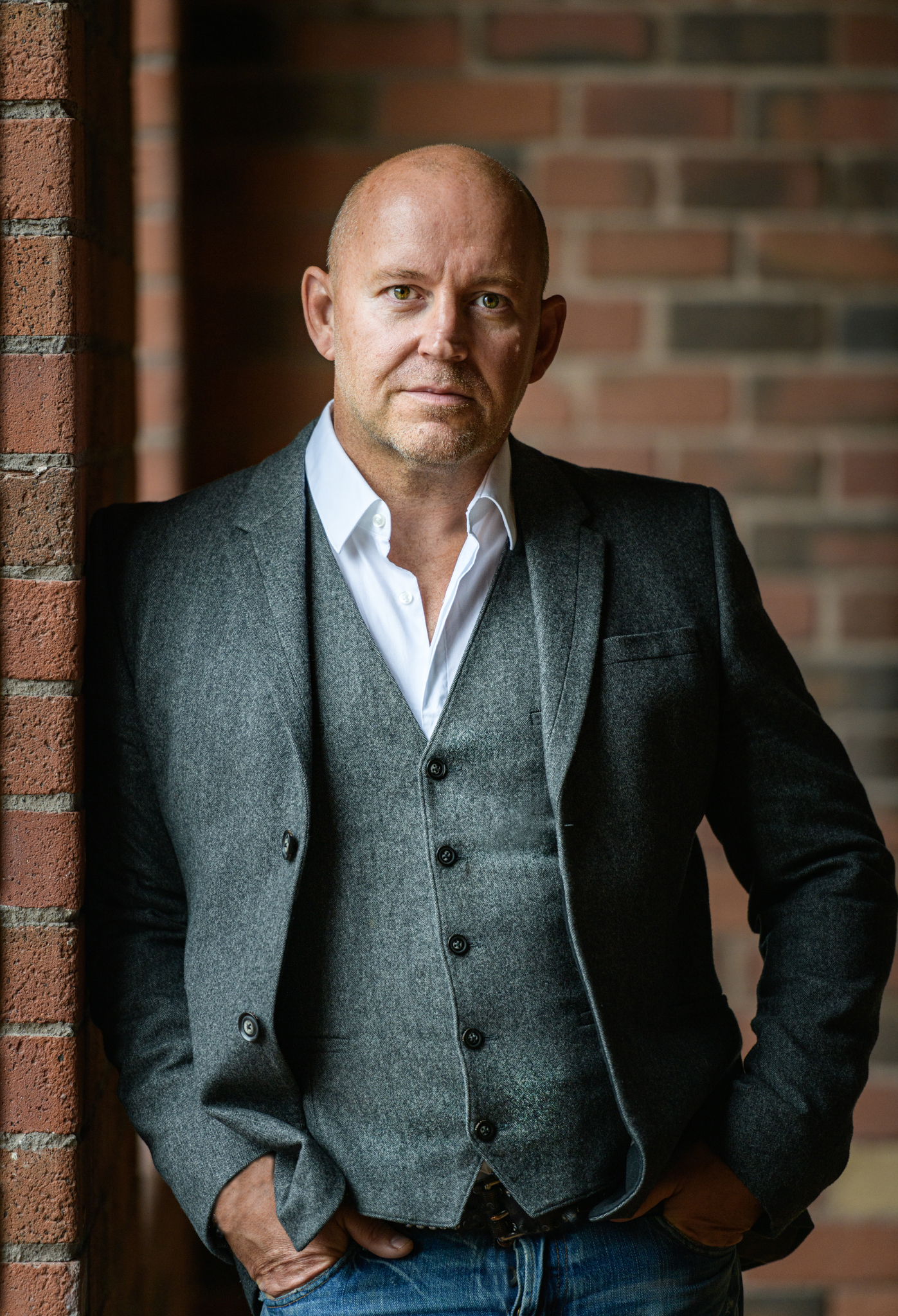
"OCD was my constant companion from childhood. The intrusive thoughts, the rituals, the compulsive checking — not because I wanted to, but because not doing them felt unbearable. I know the specific exhaustion of OCD: the mental gymnastics, the brief relief after a compulsion, then the thought returning stronger than before. I recovered from OCD in 1996 — and the understanding I gained became the foundation of The Linden Method. OCD is not a lifelong condition to be managed. It can be eliminated."
Charles Linden
Founder, The Linden Method · Recovered from anxiety disorder, 1996
Charles will personally guide and reassure you
Your membership includes access to Charles's live group sessions — where he personally answers questions, addresses fears, and guides members through recovery. If and when you want that direct contact, it is there. You are not doing this alone, and Charles is not a distant figurehead. He shows up. He listens. And he knows — from his own experience — exactly what you are going through.
Understanding Obsessive-Compulsive Disorder
OCD is widely misunderstood — often portrayed as excessive tidiness or a love of organisation. In reality, OCD is a severely debilitating anxiety disorder characterised by intrusive, distressing thoughts (obsessions) and repetitive behaviours (compulsions) performed to reduce the resulting anxiety. The compulsions provide temporary relief but reinforce the OCD cycle, trapping sufferers in an exhausting loop. Breaking that cycle requires addressing the fear sensitisation driving it.
These symptoms are real physiological responses — not imagined. Understanding them is the first step to addressing them.
Repeated, distressing thoughts that feel impossible to ignore — often about harm, contamination, religion, sexuality, or symmetry.
Repetitive actions — checking, washing, counting, arranging, or mental rituals — performed to neutralise anxiety from obsessions.
Compulsions provide short-term relief, but anxiety returns and often escalates, requiring more frequent or elaborate rituals.
OCD can occupy several hours of every day, severely impacting work, relationships, and quality of life.
The intrusive thoughts cause intense shame, guilt, and fear — particularly in 'Pure O' OCD where there are no visible compulsions.
Unlike psychosis, most people with OCD recognise their thoughts are irrational — which paradoxically intensifies the distress.
OCD occurs when the brain's alarm centre becomes sensitised to the content of intrusive thoughts, treating them as genuine threats requiring action. Intrusive thoughts themselves are universal — everyone has odd, unwanted thoughts. In OCD, the alarm system responds to these thoughts with intense anxiety, the person then attempts to neutralise that anxiety through compulsions, and the repetition of this cycle deepens the neural pathway. The alarm centre's sensitivity grows over time, making thoughts feel increasingly threatening.
This is not a mental illness
Obsessive-Compulsive Disorder is a biological state — a fear response that has become stuck in an over-alert position. It is not a personality flaw, a sign of weakness, or an irreversible condition. It can be addressed and resolved.
Most people who find us have tried at least one of these. They work for some things — but not for this, because they don't address the actual cause.
🔄
The standard treatment involves deliberately triggering obsessional thoughts and resisting compulsions — a process many find intolerable and which has high drop-out rates.
🔄
Clomipramine and SSRIs help around 40-60% of people with OCD to some degree, but rarely produce full recovery and typically require long-term use.
🔄
ACT encourages accepting intrusive thoughts as 'just thoughts' and committing to values-based action. While this can reduce the power of individual thoughts, it does not recalibrate the amygdala sensitisation generating them.
🔄
EFT applies tapping to acupressure points while recalling distressing thoughts. It has no established mechanism for reducing the amygdala sensitisation that gives intrusive thoughts their power in OCD. Any relief is temporary and does not break the obsession-compulsion cycle at its root.
🔄
Hypnotherapy induces a relaxed, suggestible state but has no established mechanism for recalibrating the sensitised threat-response system that makes intrusive thoughts feel compulsive. Evidence for OCD disorder-level recovery via hypnotherapy is absent.
🔄
EMDR (Eye Movement Desensitisation and Reprocessing) processes traumatic memory associations and is not a treatment mechanism for the amygdala sensitisation that fuels OCD. It does not address the anxiety charge that makes intrusive thoughts feel urgent and compelling.
None of these are wrong — they simply don't reach the root. When you address the root, everything else follows.
The Discovery · 1996
Not manages it. Not reduces it. Removes it.
Every anxiety disorder — panic, OCD, phobias, PTSD, health anxiety, social anxiety — shares one root cause: fear response locked at an abnormally high level. Fear disorder. Every existing therapy tries to help you cope with that state. None of them were designed to reset it.
In 1996, Charles Linden — himself a severe anxiety sufferer — discovered something that changed everything. The human brain already contains the mechanism for resetting that sensitisation back to its correct baseline. It is not a drug, not a technique, not a coping strategy. It is a biological process built into every human being. It was always there. It had simply never been identified, named, or used as the basis for a recovery method.
That discovery became The Linden Method. It works because it reverse-engineered the solution your own biology already holds — removing not just the symptoms, but the underlying disorder that generates them. Every panic attack. Every intrusive thought. Every compulsion. Every physical sensation. All of them are products of that one elevated state. Bring the state back to normal, and all of them resolve.
"The most significant advancement in the understanding and treatment of anxiety since the introduction of insulin."
— The assessment of academic researchers in healthcare science who have independently reviewed Charles Linden's work
Just as insulin didn't teach diabetics to cope with high blood sugar — it corrected the underlying biological state — The Linden Method doesn't teach anxiety sufferers to manage. It corrects the biological state that produces the suffering. Charles Linden is recognised as the first person to have identified the built-in biological mechanism that makes this possible.
You do not need to suffer any longer.
You need the science that stops it. And that science now exists.
Most people who come to us have already spent years trying to recover. What they hadn't tried was addressing the actual cause.
The Linden Method comes to you as video and audio — no textbooks, no complex therapy exercises, no homework. You follow along at your own pace, in your own home.
Within the first session, most people have a moment where the anxiety makes sense for the first time. That understanding alone starts to reduce the fear. You're not broken. There's a clear way out.
Most people notice a real, measurable reduction in anxiety within hours of starting. The fear becomes quieter. The grip loosens. Life starts to open back up.
"My OCD had me checking the stove over 200 times before I could leave the house. I lost my job. I tried ERP three times but couldn't get through it. The Linden Method made me understand for the first time what was actually happening in my brain. Slowly, over about eight weeks, the urge to check just faded. I now leave the house in under ten minutes."
Nicola B.
Leeds, UK
Everything included
Includes support & Charles' live sessions · 60-day guarantee · Instant access
This is the transformation our participants describe. Not management — a complete change in how you feel every day.
In their own words
Filmed testimonials from people who recovered using The Linden Method.
OCD Recovery Story
The Linden Method
OCD Recovery Story
The Linden Method
OCD Recovery Story
The Linden Method
OCD Recovery Story
The Linden Method
OCD Recovery Story
The Linden Method
OCD Recovery Story
The Linden Method
The Linden Method — everything you need to overcome OCD and recover fully, not just manage it.
Program · Program + advice · Lifetime — choose your plan
60-Day Money-Back Guarantee — full refund, no questions asked
Join The Recovery Programme
Instant access · 60-Day Guarantee · Card or PayPal
Honest answers about Obsessive-Compulsive Disorder and recovery
Join 650,000+ people who have recovered fully and lastingly with The Linden Method.
Recover from OCD — from £19760-Day Money-Back Guarantee · Instant access · No medication
Generalised anxiety disorder causes constant worry, physical tension, and exhaustion. The Linden Met…
Learn moreHealth anxiety creates an exhausting cycle of physical symptoms, reassurance-seeking, and fear. The …
Learn morePTSD does not require you to relive your trauma to recover. The Linden Method addresses the anxiety …
Learn moreA clear next step
The Linden Method uses Threat Recalibration Therapy (TRT™), a structured process designed to recalibrate the automatic threat response that keeps anxiety active. Its focus is the response behind persistent fear, rather than managing each symptom separately. Explore the explanation, evaluation and real recovery experiences, or go straight to the program options.
See the reported outcomes: the evaluation cohort’s average anxiety score moved from 18.28 (severe) to 2.84 (minimal). Read the evaluation for the study details, alongside clients’ own accounts of recovery.
View recovery program optionsThe Linden Method · Fear deactivation
Anxiety can feel like an alarm that has forgotten the danger is over. The Linden Method explains what keeps that alarm switched on — and the process for deactivating it.

From Our Recovery Team
Every coach at The Linden Method has personally been through severe anxiety — and fully recovered using the same approach they now teach.
A personal note from Austin Thomas
Anxiety Recovery Practitioner — LAR Certified
I spent years convinced that my health anxiety and OCD were simply part of who I was. Every physical symptom felt like proof of a catastrophe. Every intrusive thought felt like evidence that something was deeply wrong with me.
Doctors reassured me. Therapists taught me coping strategies. And for a while, those things helped a little. But the anxiety always came back, because nobody had explained what was actually sustaining it.
What changed everything was not more therapy or more medication — it was understanding. When I understood what my nervous system was doing and why, the anxiety lost its power over me.
I recovered. Fully. And now I bring that understanding to every person I coach — not as theory, but as lived, embodied knowledge. I know the fear from the inside. And I know exactly what it takes to leave it behind.
"When you understand what anxiety actually is, the fear of having it begins to dissolve. That is where recovery begins."
Austin Thomas
Anxiety Recovery Practitioner — LAR Certified
A personal note from Ben Tams
Anxiety Recovery Practitioner — LAR Certified
Suffering on and off with anxiety from a very young age, I was off school from 15 onwards with chronic fatigue. The anxiety persisted into my 20s and 30s — alongside OCD that quietly shaped much of my daily life — until I found this methodology and completely recovered.
Since 2018, I have coached over 300 individuals, passing on everything I have learned to support their recovery.
I have helped psychology students, healthcare workers, TV actors, finance managers, and even an Olympic champion to recover from anxiety and OCD. Every single one of them was told at some point — implicitly or explicitly — that full recovery wasn't possible. Every single one of them proved that wrong.
"To learn recovery is to take the sting out of anxiety, to train the subconscious mind to reduce the fear sensation, and to live as yourself — in the moment, for good."
Ben Tams
Anxiety Recovery Practitioner — LAR Certified









