
Program Only
12 months of self-guided digital lessons, audio, visualisations and guides. Includes Ask Chuck, 24/7 AI recovery support; no human support.
The fear of vomiting can take over your entire life — affecting what you eat, where you go, and how you live. There is a way out that doesn't involve forcing yourself to be sick.
650,000+
people recovered worldwide
60-day money-back guarantee · Instant access
Recovery from Emetophobia is possible — and thousands of people have already done it.
You might be reading this because…
You probably haven't told many people about this. It's one of those things that sounds trivial when you say it out loud — 'I'm scared of being sick' — but the reality is anything but. You check food labels. You avoid certain restaurants, certain foods, certain social situations. You've probably declined events involving alcohol, or being around people who might be unwell. When someone in your household gets a stomach bug, your whole world goes into crisis mode. The anxiety itself produces nausea — which then increases your anxiety about vomiting — and that particular cruelty is its own special hell. You've lived with this for years, possibly decades. You've never found a treatment that didn't involve someone suggesting you do the one thing you most dread.
If any of that resonates — you're in exactly the right place.
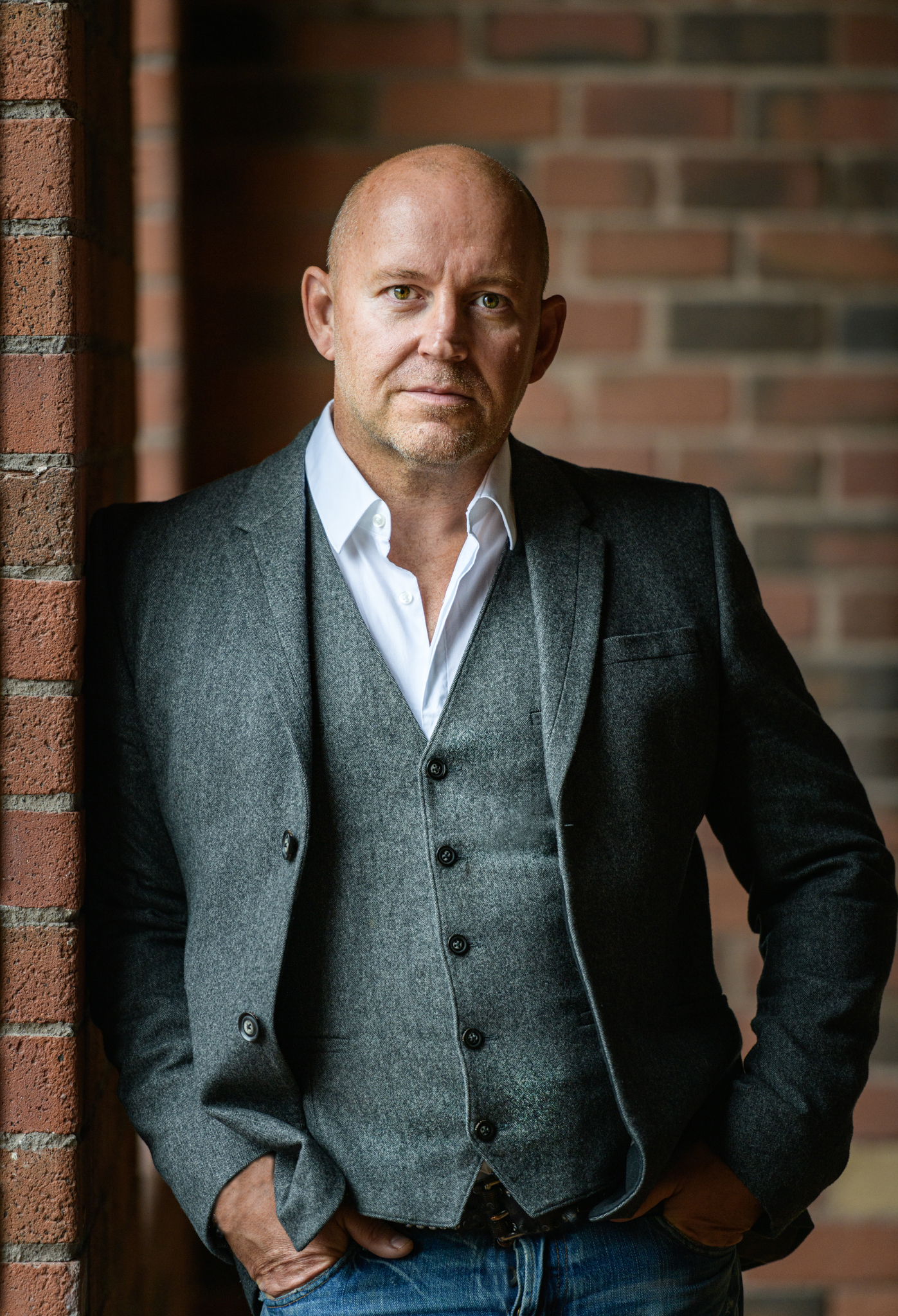
A personal message from Charles Linden
"Fear of vomiting controlled my relationship with food, travel, and social situations as part of my wider anxiety disorder. The hypervigilance around nausea, the scanning of my body for any signal that something might be wrong, the elaborate planning to stay near a safe place — I lived all of that. I know how consuming and isolating emetophobia becomes, and how few clinicians truly understand it. The Linden Method addresses the root fear response — not the avoidance patterns built around it — and that is why it works where other approaches don't."
Charles Linden
Founder, The Linden Method · Recovered from anxiety disorder, 1996
Charles will personally guide and reassure you
Your membership includes access to Charles's live group sessions — where he personally answers questions, addresses fears, and guides members through recovery. If and when you want that direct contact, it is there. You are not doing this alone, and Charles is not a distant figurehead. He shows up. He listens. And he knows — from his own experience — exactly what you are going through.
Understanding Emetophobia
Emetophobia — the fear of being sick, seeing others be sick, or being near anyone who might vomit — is one of the most common specific phobias, yet one of the least discussed. Sufferers often develop elaborate avoidance strategies around food, social situations, pregnancy, and alcohol. Because the avoidance appears 'sensible', emetophobia often goes undiagnosed for years while it progressively restricts the sufferer's life.
These symptoms are real physiological responses — not imagined. Understanding them is the first step to addressing them.
Overwhelming dread of being sick that is disproportionate to the actual risk and persists despite knowing this.
Restricting diet to 'safe' foods, checking expiry dates obsessively, and refusing to eat in restaurants or at others' homes.
Avoiding hospitals, children, drunk people, fairground rides, boats, or any situation associated with nausea or vomiting.
Declining invitations, avoiding alcohol, pregnancy fears, and extreme discomfort around illness in others.
The anxiety about vomiting produces genuine nausea — which then increases anxiety about vomiting, creating a self-reinforcing loop.
Severe food restriction in some cases leading to dietary inadequacy and weight concerns.
Emetophobia typically originates with a single traumatic or distressing vomiting episode — often in childhood — which the brain's alarm centre records as an extreme threat. Through sensitisation, this alarm fires whenever vomiting is encountered, anticipated, or even discussed. The physical nausea produced by this anxiety response then creates additional alarm (the sufferer fears they are about to vomit), escalating the anxiety further. The avoidance behaviours that develop provide short-term relief but deepen the sensitisation over time.
This is not a mental illness
Emetophobia is a biological state — a fear response that has become stuck in an over-alert position. It is not a personality flaw, a sign of weakness, or an irreversible condition. It can be addressed and resolved.
Most people who find us have tried at least one of these. They work for some things — but not for this, because they don't address the actual cause.
🔄
Unlike other phobias where exposure can be planned, emetophobia-specific exposure is practically and ethically complex. Most therapists have limited experience with it.
🔄
Challenging the belief that vomiting is dangerous does not prevent the brain's alarm centre from firing a terror response when the threat is encountered.
🔄
While some find hypnotherapy helpful for relaxation, it does not systematically address fear sensitisation and results are inconsistent.
🔄
EFT applies tapping to acupressure points while recalling distressing thoughts. It has no established mechanism for recalibrating the amygdala sensitisation that makes vomiting feel like a mortal threat. Any relief is typically temporary and does not reduce food or social avoidance.
🔄
EMDR (Eye Movement Desensitisation and Reprocessing) processes traumatic memory associations and is not a treatment mechanism for the ongoing amygdala sensitisation driving emetophobia. It does not address the anxiety-nausea loop or the progressive avoidance behaviours that define the condition.
None of these are wrong — they simply don't reach the root. When you address the root, everything else follows.
The Discovery · 1996
Not manages it. Not reduces it. Removes it.
Every anxiety disorder — panic, OCD, phobias, PTSD, health anxiety, social anxiety — shares one root cause: fear response locked at an abnormally high level. Fear disorder. Every existing therapy tries to help you cope with that state. None of them were designed to reset it.
In 1996, Charles Linden — himself a severe anxiety sufferer — discovered something that changed everything. The human brain already contains the mechanism for resetting that sensitisation back to its correct baseline. It is not a drug, not a technique, not a coping strategy. It is a biological process built into every human being. It was always there. It had simply never been identified, named, or used as the basis for a recovery method.
That discovery became The Linden Method. It works because it reverse-engineered the solution your own biology already holds — removing not just the symptoms, but the underlying disorder that generates them. Every panic attack. Every intrusive thought. Every compulsion. Every physical sensation. All of them are products of that one elevated state. Bring the state back to normal, and all of them resolve.
"The most significant advancement in the understanding and treatment of anxiety since the introduction of insulin."
— The assessment of academic researchers in healthcare science who have independently reviewed Charles Linden's work
Just as insulin didn't teach diabetics to cope with high blood sugar — it corrected the underlying biological state — The Linden Method doesn't teach anxiety sufferers to manage. It corrects the biological state that produces the suffering. Charles Linden is recognised as the first person to have identified the built-in biological mechanism that makes this possible.
You do not need to suffer any longer.
You need the science that stops it. And that science now exists.
Most people who come to us have already spent years trying to recover. What they hadn't tried was addressing the actual cause.
The Linden Method comes to you as video and audio — no textbooks, no complex therapy exercises, no homework. You follow along at your own pace, in your own home.
Within the first session, most people have a moment where the anxiety makes sense for the first time. That understanding alone starts to reduce the fear. You're not broken. There's a clear way out.
Most people notice a real, measurable reduction in anxiety within hours of starting. The fear becomes quieter. The grip loosens. Life starts to open back up.
"Emetophobia had controlled me since I was seven years old. I hadn't eaten in a restaurant in fourteen years. I'd turned down promotions because they involved travel. When I found The Linden Method and realised there was no exposure involved, I actually cried with relief. Within twelve weeks I ate at a restaurant with my family for the first time since my wedding. It still makes me emotional to think about it."
Rachel P.
Cambridge, UK
Everything included
Includes support & Charles' live sessions · 60-day guarantee · Instant access
This is the transformation our participants describe. Not management — a complete change in how you feel every day.
The Linden Method — everything you need to overcome emetophobia and recover fully, not just manage it.
Program · Program + advice · Lifetime — choose your plan
60-Day Money-Back Guarantee — full refund, no questions asked
Join The Recovery Programme
Instant access · 60-Day Guarantee · Card or PayPal
Honest answers about Emetophobia and recovery
Join 650,000+ people who have recovered fully and lastingly with The Linden Method.
Recover from emetophobia — from £19760-Day Money-Back Guarantee · Instant access · No medication
Agoraphobia traps people in their homes and destroys lives. The Linden Method offers a compassionate…
Learn moreHealth anxiety creates an exhausting cycle of physical symptoms, reassurance-seeking, and fear. The …
Learn moreOCD is not about cleanliness — it's a severe anxiety disorder with intrusive thoughts and compulsive…
Learn moreA clear next step
The Linden Method uses Threat Recalibration Therapy (TRT™), a structured process designed to recalibrate the automatic threat response that keeps anxiety active. Its focus is the response behind persistent fear, rather than managing each symptom separately. Explore the explanation, evaluation and real recovery experiences, or go straight to the program options.
See the reported outcomes: the evaluation cohort’s average anxiety score moved from 18.28 (severe) to 2.84 (minimal). Read the evaluation for the study details, alongside clients’ own accounts of recovery.
View recovery program optionsThe Linden Method · Fear deactivation
Anxiety can feel like an alarm that has forgotten the danger is over. The Linden Method explains what keeps that alarm switched on — and the process for deactivating it.

From Our Recovery Team
Every coach at The Linden Method has personally been through severe anxiety — and fully recovered using the same approach they now teach.
A personal note from Helena Cole
Anxiety Recovery Practitioner — LAR Certified
My goal — in every session, with every person I work with — is simply this: to help you. Not to analyse your past. Not to give you a toolkit of strategies to manage something that can be removed entirely.
I recovered from an anxiety disorder that had shaped my daily life for years. I know what it feels like to believe that this is just how things are — that the world has shrunk, that the fear is permanent, that you are somehow different from the people who do recover.
You are not different. I was not different. What I lacked — and what I now give to every person I coach — was simply the right understanding.
Recovery is not only possible — it is the most natural outcome when you stop fighting the anxiety and start understanding it. I am here to walk that path with you, at your pace, with no pressure and no judgment.
"You have spent long enough trying to manage this. My job is to help you leave it behind — not manage it better, but leave it behind entirely."
Helena Cole
Anxiety Recovery Practitioner — LAR Certified
A personal note from Jemma
Anxiety Recovery Practitioner — LAR Certified
Panic disorder took hold of my life in my early twenties. It started with one episode on the motorway that I couldn't explain — and within months I had reorganised my entire life around avoiding anything that might trigger another one.
I stopped driving. I stopped travelling alone. I narrowed my world down to what felt safe, and then found that the 'safe' zone kept shrinking. I saw it happening and felt powerless to stop it.
I tried CBT, breathing exercises, medication. They gave me tools, but the tools never addressed what was underneath. Every time the techniques failed in a real situation, I felt worse than before.
The Linden Method gave me something none of those approaches had — an explanation. Once I understood what my brain was actually doing, the panic became something I could understand rather than something I had to flee from. Recovery followed naturally from that understanding.
I now coach others through panic disorder and agoraphobia specifically, because I know what it costs — the relationships, the freedom, the years — and I want to help people get those things back as quickly as possible.
"You don't need to white-knuckle your way through anxiety. You need to understand it. Once you do, everything changes."
Jemma
Anxiety Recovery Practitioner — LAR Certified









