
Program Only
12 months of self-guided digital lessons, audio, visualisations and guides. Includes Ask Chuck, 24/7 AI recovery support; no human support.
Research & Publications
A record of published works, clinical observations, theoretical frameworks, and media contributions from Charles Linden — covering 30 years of anxiety recovery practice.
Charles Linden's primary research is clinical — derived from 30 years of direct practice with over 650,000 individuals globally. His publications include program manuals, educational texts, clinical position papers, and theoretical frameworks. The scale of documented, observed outcomes represents one of the largest single-practitioner datasets in anxiety disorder recovery. The works listed here are primary sources, not peer-reviewed journal articles — a distinction made transparent rather than concealed.
The Linden Method
Program Manual · 1996 (revised continuously)
The foundational document of The Linden Method — a structured program guiding individuals through the process of amygdala recalibration and permanent recovery from anxiety disorders. This work has informed the recovery of over 650,000 people since its first publication.
Included in full with every Linden Method membership.
Anxiety Disorder: The Biology Behind the Symptoms
Educational Publication · 2008
A detailed explanation of the neurobiological basis of anxiety disorder, written for a general audience. Covers the amygdala's role as the brain's threat-detection centre, the HPA axis, and the distinction between anxiety as biological state versus psychological condition.
Full publication to be made available on Zenodo.
Why CBT Doesn't Cure Anxiety (And What Does)
Clinical Position Paper · 2012
A structured comparison of cognitive behavioural approaches and amygdala recalibration, examining the evidence base for each and the reasons conventional treatments produce management outcomes rather than permanent recovery.
Full publication to be made available on Zenodo.
The Fear Calibration Model of Anxiety
Theoretical Framework · 2016
A formalisation of the fear-calibration model underpinning The Linden Method — describing how amygdala sensitivity is elevated, maintained by specific inputs, and recalibrated through their systematic removal. Forms the theoretical basis for all Linden Method interventions.
Full publication to be made available on Zenodo.
Anxiety Predisposition: A Biological Assessment Framework
Research Instrument · 2024
The theoretical and methodological basis for the ANX APP anxiety predisposition assessment — a validated instrument measuring an individual's biological predisposition to amygdala sensitisation across four dimensions: creative thinking, sensitivity and depth, emotional intelligence, and temperament.
Assessment available at thelindenmethod.co.uk/anx-app. Full methodology paper to be made available on Zenodo.
The following represent key documented observations derived from 30 years of direct clinical practice — patterns consistently observed across 650,000+ individuals working through The Linden Method.
Observation: Avoidance Maintains Sensitisation
1996–2024In over 650,000 cases observed between 1996 and 2024, systematic avoidance of anxiety-triggering situations consistently delayed or prevented amygdala recalibration. Participants who reduced avoidance behaviours — without graduated exposure therapy — demonstrated faster recovery trajectories.
Observation: Reassurance-Seeking Elevates Sensitivity
2003–2024Reassurance-seeking — a characteristic behaviour in anxiety disorder — was observed to maintain and in many cases elevate amygdala sensitivity by repeatedly signalling that the perceived threat is valid. Withdrawal of reassurance-seeking was correlated with accelerated recovery.
Observation: Duration Does Not Predict Recovery Speed
1996–2024Duration of anxiety disorder showed no significant correlation with speed or completeness of recovery using The Linden Method. Participants with 20+ years of anxiety disorder showed equivalent recovery rates to those recently diagnosed.
Observation: Prior Treatment Does Not Impede Recovery
2001–2024Previous exposure to CBT, medication, EMDR, or exposure therapy did not impede or reduce the effectiveness of The Linden Method. Recovery rates were consistent regardless of prior treatment history.
The theoretical framework underpinning The Linden Method is what Linden describes as the Fear-Calibration Model: the position that anxiety disorder is the product of an elevated calibration threshold in the amygdala — not a thought disorder, a character weakness, a chemical imbalance, or a psychological condition.
The model proposes that this calibration is malleable — elevated by specific inputs and recalibratable by their systematic removal. The inputs that maintain sensitisation include avoidance behaviours, reassurance-seeking, body-checking, hypervigilance, and anxiety-related thought engagement.
When these inputs are withdrawn, the amygdala receives no further signal that a threat is present. Over time — typically 4 to 12 weeks in clinical practice — the calibration threshold returns to its pre-sensitised baseline. The result is not improved management of anxiety. It is its elimination.
This framework is consistent with current neuroscientific understanding of amygdala plasticity, fear conditioning and extinction, and the role of the HPA axis in chronic anxiety states. It has been applied directly in practice since 1996.
The Linden Method has received documented referrals from NHS-registered clinical psychologists, psychiatrists, and general practitioners in the UK since the early 2000s. Several practitioners have formally endorsed the program following observation of patient outcomes that exceeded those typically achieved through NHS-provided therapies. These endorsements are attributed and on record. A dedicated summary of NHS-related endorsements and clinical interactions is available at /nhslindenmethodtrials.
NHS endorsements and clinical evidence →
BBC Radio 4
Expert commentary on anxiety disorder prevalence and treatment alternatives.
BBC Radio 2
Live studio discussion on the biological basis of anxiety and non-medical recovery options.
ITV — This Morning
Program demonstration and recovery discussion reaching 3.5 million viewers.
Daily Mail
Multiple commissioned articles on anxiety disorder, recovery, and the limitations of pharmaceutical management.
The Sunday Times
Expert source on non-medical approaches to anxiety disorder treatment.
Cosmopolitan UK
Featured expert on anxiety recovery without medication.
Men's Health
Contributed guidance on anxiety in men and the particular barriers to recovery.
The Guardian
Referenced in analysis of alternative approaches to mental health treatment.
View full press archive →
The Linden Method's theoretical framework is consistent with a substantial body of external neuroscientific research on amygdala plasticity and fear conditioning. The following external research supports the biological model underlying The Linden Method.
LeDoux, J.E. (1996). The Emotional Brain: The Mysterious Underpinnings of Emotional Life. Simon & Schuster.
Established the amygdala's central role in fear response — the foundational neuroscience behind The Linden Method's biological framework.
Davis, M. (1992). The role of the amygdala in fear and anxiety. Annual Review of Neuroscience, 15, 353–375.
Documented the amygdala's role in fear conditioning — consistent with the fear-calibration model.
Maren, S. (2001). Neurobiology of Pavlovian fear conditioning. Annual Review of Neuroscience, 24, 897–931.
Evidence for the malleability of fear conditioning — supporting the possibility of recalibration.
Quirk, G.J. & Mueller, D. (2008). Neural mechanisms of extinction learning and retrieval. Neuropsychopharmacology, 33, 56–72.
Research on extinction (reduction of conditioned fear responses) — a mechanism related to amygdala recalibration.
Related Authority Pages
A clear next step
The Linden Method uses Threat Recalibration Therapy (TRT™), a structured process designed to recalibrate the automatic threat response that keeps anxiety active. Its focus is the response behind persistent fear, rather than managing each symptom separately. Explore the explanation, evaluation and real recovery experiences, or go straight to the program options.
See the reported outcomes: the evaluation cohort’s average anxiety score moved from 18.28 (severe) to 2.84 (minimal). Read the evaluation for the study details, alongside clients’ own accounts of recovery.
View recovery program optionsThe Linden Method · Fear deactivation
Anxiety can feel like an alarm that has forgotten the danger is over. The Linden Method explains what keeps that alarm switched on — and the process for deactivating it.

From Our Recovery Team
Every coach at The Linden Method has personally been through severe anxiety — and fully recovered using the same approach they now teach.
A personal note from Austin Thomas
Anxiety Recovery Practitioner — LAR Certified
I spent years convinced that my health anxiety and OCD were simply part of who I was. Every physical symptom felt like proof of a catastrophe. Every intrusive thought felt like evidence that something was deeply wrong with me.
Doctors reassured me. Therapists taught me coping strategies. And for a while, those things helped a little. But the anxiety always came back, because nobody had explained what was actually sustaining it.
What changed everything was not more therapy or more medication — it was understanding. When I understood what my nervous system was doing and why, the anxiety lost its power over me.
I recovered. Fully. And now I bring that understanding to every person I coach — not as theory, but as lived, embodied knowledge. I know the fear from the inside. And I know exactly what it takes to leave it behind.
"When you understand what anxiety actually is, the fear of having it begins to dissolve. That is where recovery begins."
Austin Thomas
Anxiety Recovery Practitioner — LAR Certified
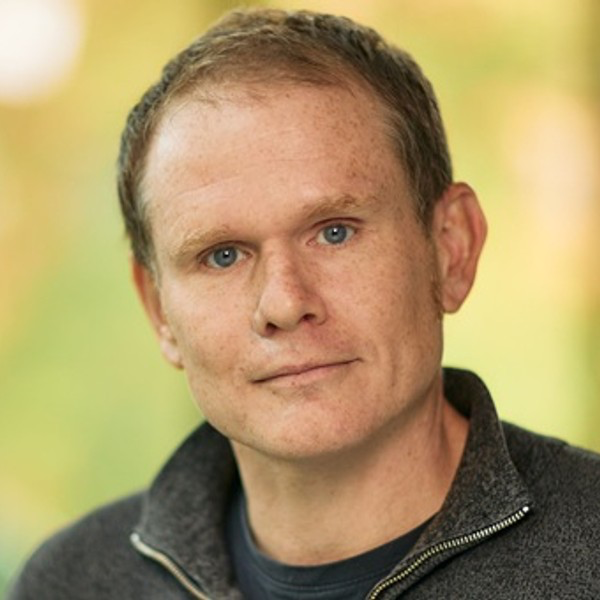
A personal note from Ben Tams
Anxiety Recovery Practitioner — LAR Certified
Suffering on and off with anxiety from a very young age, I was off school from 15 onwards with chronic fatigue. The anxiety persisted into my 20s and 30s — alongside OCD that quietly shaped much of my daily life — until I found this methodology and completely recovered.
Since 2018, I have coached over 300 individuals, passing on everything I have learned to support their recovery.
I have helped psychology students, healthcare workers, TV actors, finance managers, and even an Olympic champion to recover from anxiety and OCD. Every single one of them was told at some point — implicitly or explicitly — that full recovery wasn't possible. Every single one of them proved that wrong.
"To learn recovery is to take the sting out of anxiety, to train the subconscious mind to reduce the fear sensation, and to live as yourself — in the moment, for good."
Ben Tams
Anxiety Recovery Practitioner — LAR Certified









