Every paradigm shift in medicine begins with a person.
Insulin began with Frederick Banting, a surgeon who could not let go of an idea. Penicillin began with Alexander Fleming noticing something that others would have thrown away. The germ theory of disease began with Semmelweis, who was ridiculed for insisting that doctors should wash their hands.
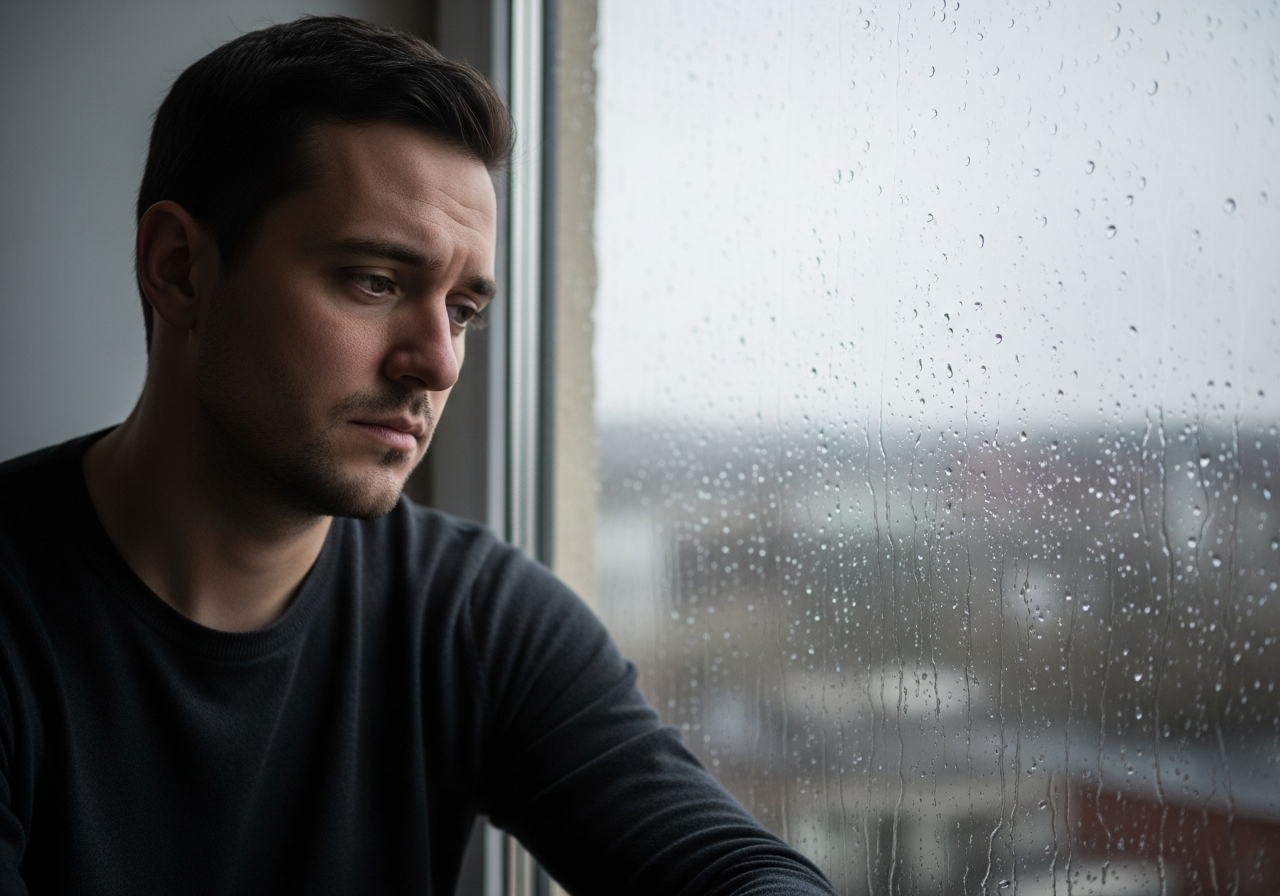
What supporters are now calling Mental Health's Insulin Moment began with a nine-year-old boy in Worcestershire who started experiencing unexplained terror and could not make it stop.
That boy was Charles Linden.
The Beginning — Age Nine
Charles' anxiety did not begin as a single dramatic episode. It crept in — a background hum of unease that gradually, over months and years, became louder and more intrusive.
By his early teens, he was experiencing panic attacks: sudden, overwhelming episodes of physical terror with no identifiable cause. Racing heart. Breathlessness. Dizziness. A certainty of catastrophe. A desperate need to escape — even when there was nowhere to escape to.
He was told, as many anxiety sufferers are told, that it was 'just nerves'. That he was sensitive. That he needed to relax. That it would pass.
It did not pass.
The Years of Treatment — and Failure
By his late teens and into his twenties, Charles had begun the treatment journey that millions of anxiety sufferers know intimately. Medication — several different types, at several different doses. Therapy. CBT. Counselling. Dietary interventions. Breathing techniques. Relaxation programs. Exposure therapy.
Each approach offered something. None offered recovery.
Medication blunted the worst of it but did not resolve it — and came with its own costs: cognitive dulling, dependency, the ever-present anxiety about what would happen if he stopped taking it.
Therapy helped him understand his anxiety better. But understanding anxiety and recovering from it, Charles discovered, are not the same thing at all.
CBT — the gold standard of the psychological establishment — taught him to challenge his anxious thoughts. But the thoughts were not the problem. The problem was a biological mechanism that produced thoughts faster than any cognitive challenge could address them.
"I spent 27 years being told that anxiety was a psychological problem. Therapists analysed my thoughts. Doctors prescribed medication for my nervous system. Nobody ever explained that the two things are connected — that anxiety is biological, not psychological, and that if you treat the biology, the psychology resolves itself automatically."
The Conditions — Severe, Multiple, Persistent
It is important to understand the full scope of what Charles experienced. This was not mild social anxiety or occasional panic. It was severe, multi-condition anxiety disorder that pervaded every aspect of his life for nearly three decades.
- Panic disorder — multiple panic attacks daily at its peak
- Agoraphobia — fear of leaving places of perceived safety, eventually restricting his movement significantly
- OCD — intrusive thoughts and compulsive behaviours that consumed hours each day
- Depersonalisation — a persistent disconnection from reality that many sufferers describe as the most terrifying aspect of anxiety disorder
- Depression — a natural consequence of years of suffering with no resolution in sight
- Health anxiety — a constant preoccupation with physical symptoms, doctor's appointments, and fears of serious illness
If you are reading this as a sufferer and recognising yourself in any of these conditions, understand this: Charles recovered from all of them. Completely. Permanently. Not one by one through years of individual treatments. All of them, simultaneously, through a single mechanism.
The Moment of Discovery
The discovery itself was not a single dramatic revelation. Charles describes it as a gradual coalescence — pieces of insight gathering over weeks and months until they formed a coherent picture that had never been presented to him by any therapist, doctor, or textbook.
The picture was this: anxiety disorders are not caused by thoughts, experiences, or personality. They are caused by a biological mechanism — the amygdala-centred fear response — that has become sensitised and is firing inappropriately. The symptoms, the thoughts, the avoidance, the compulsions, the physical sensations — these are all outputs of that one mechanism.
And if all the symptoms come from one mechanism, then addressing that mechanism — rather than each symptom individually — should resolve them all.
It did.
Charles applied this principle in his own life. He stopped doing the things that maintained his amygdala sensitisation — the avoidance, the safety behaviours, the medication, the constant monitoring of symptoms — and replaced them with a structured approach designed to allow the amygdala to return to its baseline state.
Within weeks, the anxiety that had defined his existence for 27 years began to dissolve. Within months, it was gone.
"Anxiety disorders are biological states, not psychological illnesses — and biological states can be changed by withdrawing the inputs that sustain them."
From Sufferer to Pioneer
The obvious next step — for anyone who had suffered as Charles had suffered — was to share the discovery.
In 1997, he published the first version of The Linden Method. The response was immediate. People who had been suffering for years, who had tried every available treatment, who had been told they would need to manage their anxiety indefinitely — they recovered.
Not all of them, immediately. The method was refined. The team grew. The delivery formats expanded. But the principle — the biological truth at the centre of the discovery — held.
Over the following three decades, more than 650,000 people globally used The Linden Method to achieve permanent recovery from anxiety disorders.
Charles did not need a clinical trial to validate what he knew. He had 650,000 trials. Each one a person who had tried everything else and finally recovered.
The Formal Articulation — TRT™ Therapy and Mental Health's Insulin Moment
For three decades, Charles had the outcomes but had not formally published the neurobiological theory that explained them. TRT™ Therapy is the formal articulation of that theory.
It takes the mechanism Charles discovered in his own recovery, grounds it in the established neuroscience of amygdala function and limbic system sensitisation, and presents it as a coherent, replicable, teachable recovery model.
This is Mental Health's Insulin Moment. Not the beginning of Charles Linden's work — that began in a Worcestershire living room in the 1990s, after 27 years of a nine-year-old's nightmare finally ended. But the formal recognition that the mechanism is real, the outcomes are documented, and the framework is ready for the wider world.
If you are suffering from anxiety now, you are not nine years old and facing 27 years of waiting for an answer. The answer is here.
Also in The Institute of Applied Psychophysiology Network