

Program Only
12 months of self-guided digital lessons, audio, visualisations and guides. Includes Ask Chuck, 24/7 AI recovery support; no human support.

For 30 years, The Linden Method has helped over 650,000 people fully recover from anxiety disorders — not manage them, not cope with them, but switch off the fear-response mechanism that creates them.
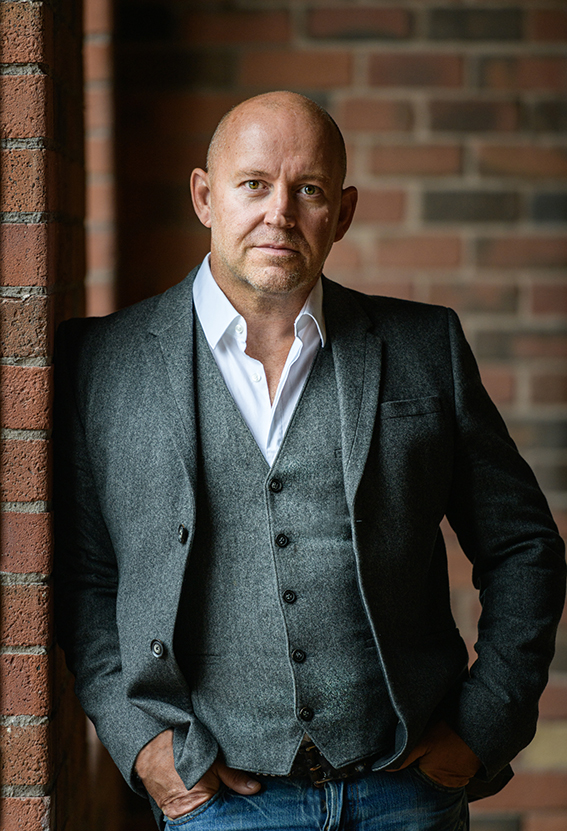
Charles Linden
Founder, The Linden Method
Recovered from severe anxiety disorder · 1996
For over twenty years I lived inside severe anxiety disorder — panic, OCD, agoraphobia, intrusive thoughts, derealisation, catastrophic thinking.
I tried everything: CBT, exposure, EMDR, medication, mindfulness, hypnosis, coping strategies. None of it reached the source.
Because the source wasn't psychological.
It was biological.
An over-sensitised fear-response mechanism in the midbrain — stuck in a state of misfiring survival activation. Once I understood that, recovery became inevitable.
Every symptom — panic, OCD, intrusive thoughts, compulsions, health anxiety, derealisation, catastrophic thinking — is an expression of one mechanism firing when it shouldn't.
Different faces. Same source. One correction.
Not a thought problem
Every symptom — however it appears — originates from one misfiring biological mechanism.
A fear-response disorder
A biological alarm system stuck in 'on.' Not a character flaw. Not a weak mind. A physiology problem.
One correction
Treat the source — not the symptoms — and everything resolves. That is what The Linden Method does.
For years I thought I had ten different problems. But they weren't separate. They were all expressions of one mechanism firing when it shouldn't.
Different faces. Same source.

The midbrain survival system
The fear-response
mechanism
Located in the midbrain survival system. This is where anxiety lives. Not in your thoughts. Not in your memories.
The only question that matters
What resets the fear-response?
Not talking. Not analysis. Not courage. Physiology.
Therapy works on the cortex — the thinking brain. Anxiety lives in the midbrain — the survival system. Those two systems do not communicate the way therapy assumes. Talking, analysing, reframing, resisting, exposing, breathing, coping — none of these reach the mechanism that is generating the symptoms.
Reassurance & talking therapy
Works on feelings. Anxiety lives deeper — in the body's survival system.
CBT & cognitive techniques
Analysing an intrusive thought gives it more power. The reflex intensifies.
Exposure & ERP
Forcing fear can re-sensitise the response. The alarm gets louder, not quieter.
Mindfulness & breathing
Coping tools perhaps. But coping isn't recovery — the mechanism keeps firing.
Medication
Manages symptoms without removing the source. Works until you stop taking it.
Resisting compulsions
Without correcting the underlying reflex, resistance strengthens the drive.
"You've been trying to fix a biological reflex
with psychological tools.
It was never going to work.
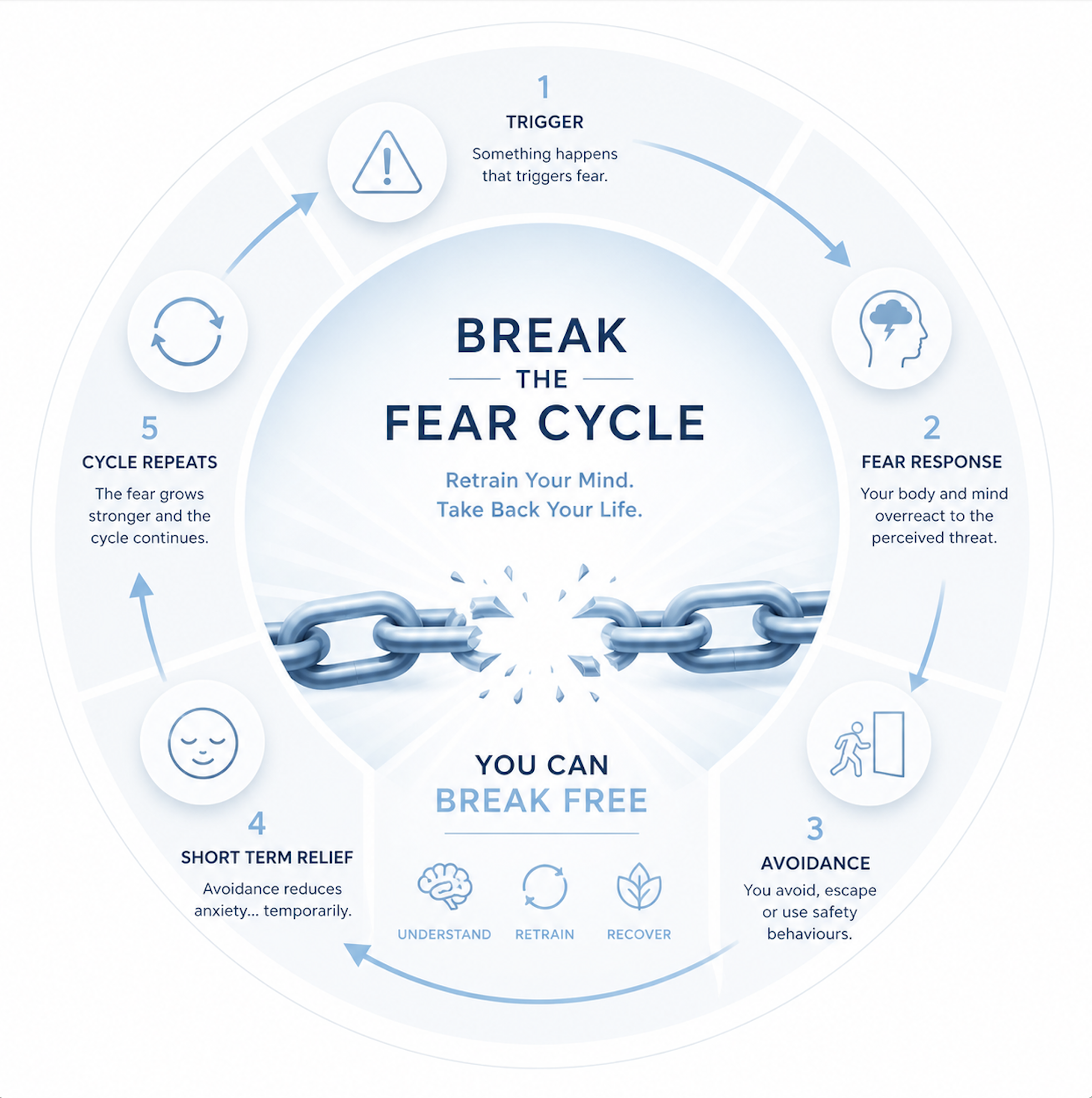
When your fear-response was sensitised, your whole body behaved exactly the way a survival system behaves when it thinks danger is everywhere. Not because you were weak — but because your alarm threshold was set too low.
These aren't separate problems. They're one pattern, expressed in different ways. Correct the mechanism — and they all resolve. Together.

What switches off the fear-response mechanism? Not talking. Not courage. Not exposure. Not analysis. Physiology. Signals. Corrective inputs. When the signals feeding the reflex stop, the mechanism recalibrates. Not gradually. Not partially. Completely.
Mindset
Belief work
Courage
It was physiology.
And physiology can change.
A mispatterned reflex can only do one thing when the signals feeding it stop.
Recovery wasn't about effort for me — it was about removing the inputs that kept the loop alive.
What you do NOT have to do
Recovery isn't a task.
It's a correction.
Recovery isn't mystical or dramatic. It's biological.
Fear loses its authority
Not through willpower — the charge simply dissolves.
Intrusive thoughts lose their charge
They appear and pass without grip, without meaning.
Compulsions lose their urgency
The drive evaporates. Not through resistance — through reset.
The body stops bracing
The physical tension, the hypervigilance — gone.
The mind stops scanning
Presence returns. Not forced. Not practised. Biological.
You feel like yourself again
This is not coping. This is correction.
Clarity
A sense of distance from the fear. Relief that it's finally making sense.
Drop in intensity
Symptom intensity reduces noticeably. Moments of normality returning.
Recalibration
Not through effort. The mechanism responding to corrected signals.
The Linden Method is the structured process that removes the signals feeding the fear-response mechanism so it can reset. It is the only recovery process built around the actual biology that drives anxiety disorders — identified by Charles Linden in 1996 and proven across 650,000+ full recoveries. Not a therapy. Not a coping framework. A correction.
Nothing like it existed before Charles developed it. No pharmaceutical, no therapy school, no self-help system had ever targeted the reflex directly — because no one had mapped it clearly enough to know how. That changed in 1996. It has never been replicated.
The Linden Method has helped over 650,000 people fully recover from anxiety disorder — not manage it, not cope with it, but switch off the mechanism that creates it. Completely.
A clear next step
The Linden Method uses Threat Recalibration Therapy (TRT™), a structured process designed to recalibrate the automatic threat response that keeps anxiety active. Its focus is the response behind persistent fear, rather than managing each symptom separately. Explore the explanation, evaluation and real recovery experiences, or go straight to the program options.
See the reported outcomes: the evaluation cohort’s average anxiety score moved from 18.28 (severe) to 2.84 (minimal). Read the evaluation for the study details, alongside clients’ own accounts of recovery.
View recovery program options